It has been almost two years since 1.21 Tricky Trials dropped on June 13, 2024, and it’s clear in hindsight that this was one of the most impactful releases since Caves & Cliffs. Trial Chambers reshaped how players approach the mid-game. The Mace flipped combat meta. The Crafter mainstreamed redstone automation. Even the “small” mob additions — Breeze and Bogged — left a lasting tactical footprint.
Trial Chambers: The New Mid-Game Anchor
Before Tricky Trials, the mid-game loop in Minecraft was loose: you’d get iron, do some caving, maybe find a stronghold, eventually trip into the Nether. There was no clear “mid-game dungeon” with handcrafted reward loops.
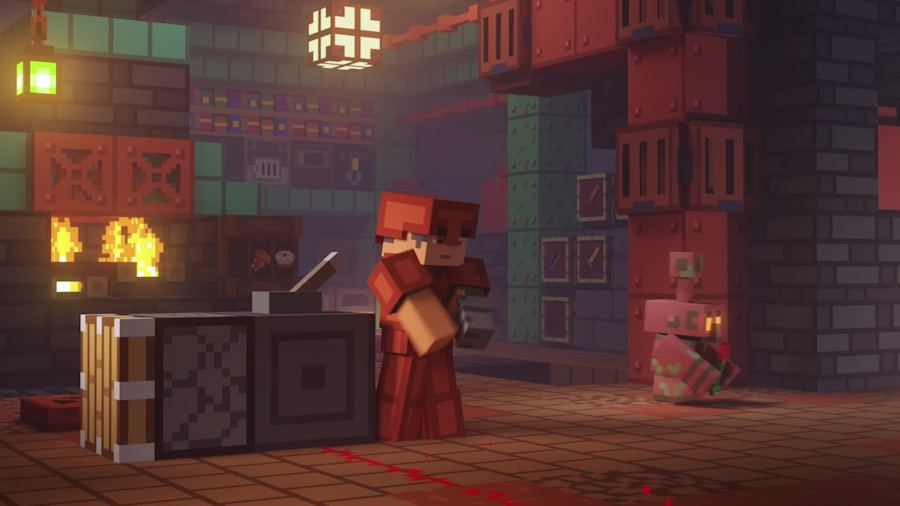
Trial Chambers fixed that. They’re common enough to find within an hour of starting a world, dangerous enough to require iron-tier gear, and reward-dense enough to justify multiple repeat visits. The Vault loot system — one-use-per-player but shareable in multiplayer — pushed players toward cooperative play in a way nothing in vanilla had done before.
Our full Trial Chambers guide still gets more pageviews per week than every other piece of content on this site combined. The structure has staying power.
The Breeze: A Genuinely New Mob Archetype
Mojang has been making Minecraft mobs for over 15 years, and most new mobs are variations of existing archetypes — a faster spider, a tougher zombie, a ranged skeleton. The Breeze broke that pattern.
The Breeze is a pure-mobility mob. It doesn’t deal heavy damage; it knocks you around. It interacts with the world (buttons, trapdoors) in ways no previous mob did. Its projectile, the Wind Charge, became a craftable consumable that players use for movement tech in their own builds. That’s a level of design depth from a single mob that’s genuinely rare.
The Bogged: A Subtle Combat Pressure Test
The Bogged seemed minor at launch — “just a skeleton with poison arrows.” In practice, the poison DoT created a different combat rhythm. You can no longer brute-force a skeleton fight in the open; you have to manage poison, carry milk, and approach from cover.
For experienced players who’d been running on autopilot for years, the Bogged is a quiet check on muscle memory. It reminded everyone that the game still has teeth.
The Mace: Combat Meta Disruption
The Mace did something few weapons in Minecraft have ever done: it created a genuine alternative to the sword for endgame combat. For years, the sword was the universally correct choice. Axes were a niche PvP pick. Bows were ranged. Done.
Then the Mace landed and suddenly there was a viable third path — one that rewarded vertical play, mobility tech, and creative engagement with the world. Mace + Riptide Trident combos are now standard in Warden hunts, in raid defense, even in casual PvP servers. We covered the full build in our Mace guide — it’s probably our most-bookmarked combat resource.
The Crafter: Redstone for the Masses
Automatic crafting has been a holy grail of Minecraft redstone for over a decade. Community workarounds existed — ridiculous dropper+furnace hybrid contraptions that worked maybe 80% of the time — but they were the domain of niche redstone YouTubers.
The Crafter took that mechanic and made it a single craftable block. Drop in items, power with redstone, get crafted output. Suddenly auto-farms of bread, baked potatoes, redstone-component subassemblies, even custom firework rockets, became trivial. Whole categories of player creativity opened up.
Copper, Tuff, and Decorative Blocks
Often glossed over but worth mentioning: the new copper and tuff block families gave builders dozens of new texture/color combinations. Copper Bulbs added a redstone-controllable light source with discrete dim states. Tuff Bricks unlocked an entire new building aesthetic that has dominated the “modern medieval” build genre ever since.
The Ominous System
Ominous Trials introduced the Bad Omen/Ominous Bottle workflow that’s since been generalized across the game. The concept of “voluntarily make this content harder for better rewards” was new to Minecraft. Mojang has hinted that the Ominous system will expand into other structures in future updates — you can already see early experiments in some snapshot strands.
What Aged Less Well
Not everything in Tricky Trials hit. A few critiques two years on:
- Heavy Core drop rate is brutally low, even by Minecraft standards. Casual players often play 50+ hours without finding one.
- Trial Chambers can feel samey after your fifth one — the procedural variation is more cosmetic than structural.
- Ominous Trials are gated by Pillager Raid Captains, an annoying prerequisite for what should be a self-contained system.
- Bedrock parity took ~3 months, frustrating cross-play groups in the early window.
The Lasting Impact
Two years later, Tricky Trials is the update that we still recommend players start exploring once they have iron armor. It defines the early-mid-game progression now. The Mace is the weapon that the entire combat meta has been re-balanced around. Trial Chambers have effectively replaced strongholds as “the dungeon you go raid for loot.”
If Mojang had stopped updating Minecraft after 1.21, the game would still have years of replayability just from this single release. They didn’t stop, of course — the 25.x and 26.x cycles have continued to add to the foundation. But Tricky Trials is the bedrock that everything since stands on.
For more on the current update cycle, check our coverage of Java 26.1, Bedrock 26.10, and the latest 26.20 Sulfur Cube drop.