The Nether is where Minecraft graduates from a sandbox into a survival game. Lava lakes, Ghast fireballs from across a 200-block-wide chasm, Piglins that turn hostile if you make eye contact in the wrong armor, and Hoglins that knockback you into the void. Walk in unprepared and you’ll lose everything — including your portal back home. Here’s the field manual we wish we’d had on our first trip.
Pre-Portal Checklist
Don’t even strike the flint until you have:
- Full iron armor minimum, diamond preferred. At least one piece must be gold for Piglin neutrality (more on that below).
- Iron or diamond sword with Fire Aspect OFF — Piglins drop loot on fire and you lose it.
- Crossbow or bow with at least 64 arrows. Ghasts only die from ranged hits in 95% of cases.
- Shield — blocks Ghast fireballs cleanly if timed right.
- Building blocks: 2 stacks of cobble + 1 stack of dirt minimum. Cobble blocks Ghasts; dirt doesn’t exist naturally in the Nether.
- Pickaxe + spare pickaxe. Breaking your only pickaxe means no portal home.
- Food: 64+ cooked steak or golden carrots.
- Water bucket: useless in the Nether (water evaporates) but you can carry it for the lava-pour trick on return.
- Flint & Steel + spare: relighting your portal home requires fire.
Portal Placement Strategy
The Overworld-to-Nether scaling is 1 block = 8 Nether blocks. A portal at Overworld coordinates (1000, 64, 1000) puts you in the Nether at roughly (125, 64, 125). This means:
- Place your home portal at a clearly marked landmark.
- Build your Nether-side portal up high, on a peninsula of netherrack, so Ghasts and Piglins don’t mob it the moment you re-enter.
- Surround the Nether side with obsidian on multiple sides so a stray Ghast fireball doesn’t snap the frame.
- Tunnel a small 2-block-wide entrance into the surrounding netherrack so the portal is hidden from open biomes.
Biome Survival Guide
Nether Wastes (the classic red biome)
Pig-zombie territory. Don’t hit a Zombified Piglin or the whole biome aggros. Otherwise neutral mobs — you can walk past them.
Crimson Forest
Lots of Hoglins (food source — they drop raw porkchop) and the occasional Piglin. Warped fungi push them away if you need to chase them. Bring shears to harvest Warped Wart Blocks if you want red/blue building materials.
Warped Forest
Generally the safest biome — Endermen spawn here but ignore you unless you look directly at their head. Wear a pumpkin or carved face if you want to look at them safely.
Basalt Delta
Most beautiful, most lethal. Magma Cubes everywhere, basalt pillars block vision, and there’s almost no flat ground. Avoid early; come back when you have full diamond gear.
Soul Sand Valley
Open, exposed, swarming with Skeletons. Bring projectile protection and a shield. Best source of Soul Sand for a wither fight and Soul Soil for soul torches.
Piglin Etiquette
Piglins are neutral if you wear ANY piece of gold armor — helmet, chest, leggings, or boots. They become hostile instantly if:
- You aren’t wearing any gold armor
- You open a chest near them (the chest counts as “stealing”)
- You break Gold Ore, Gold Block, Gilded Blackstone, etc.
- You attack a Piglin or Piglin Brute
Piglin Brutes are the spear-wielding variants found only in Bastions. They are never neutral, gold armor doesn’t pacify them. Avoid until you’re strong enough to win the melee.
Bastion Looting
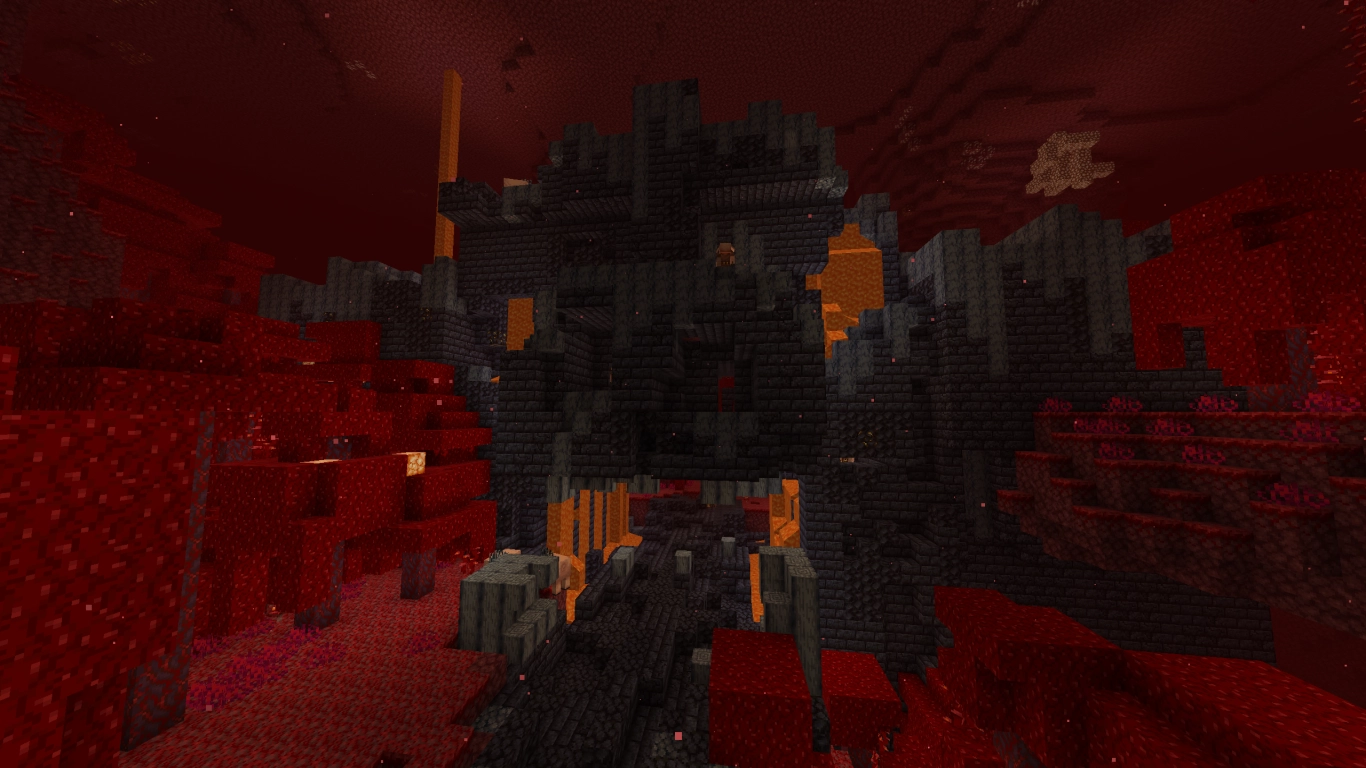
Bastion Remnants are huge blackstone fortresses scattered through every biome except Basalt Deltas. Four sub-types:
- Hoglin Stables — lots of Hoglins penned inside, easiest to loot stealthily
- Housing Units — Piglin barracks, careful chest looting required
- Treasure Room — the jackpot, contains a central gold block tower guarded by Piglin Brutes
- Bridge — built across lava chasms, dangerous but fast loot
The single best loot in Bastions is Ancient Debris (raw Netherite material), Enchanted Diamond Gear (often pre-enchanted with Soul Speed), and Pigstep music disc — the rarest disc in the game, exclusive to Bastion chests.
Mining Netherite
Netherite armor and tools are the endgame — +1 armor toughness, knockback resistance, and float-on-lava behavior on death. To make them you need Ancient Debris, found between Y=8 and Y=22 in the Nether.
The standard mining strategy:
- Dig down to Y=15 in a netherrack area.
- Place TNT bunches every 4 blocks horizontally in a straight tunnel and detonate. Netherrack blows up easily; Ancient Debris doesn’t.
- Walk back through the blast cleanup and mine any leftover dark blocks with a Diamond Pickaxe.
- Smelt Debris → Netherite Scrap. 4 Scrap + 4 Gold Ingot → Netherite Ingot.
- Use a Smithing Table with a Netherite Upgrade Smithing Template to upgrade Diamond gear → Netherite gear (lost in 1.20+, you must find/duplicate templates first).
Getting Home Alive
The cardinal rule of Nether trips: always carry the materials to build a return portal. Pack 10 obsidian blocks and a flint & steel from the start. If your home portal gets blown up by a Ghast (it happens), you can carve a new one anywhere.
Other “go home” tools:
- Water bucket trick: If you fall into lava, immediately right-click a Water Bucket on the ledge above you. It cancels lava damage instantly.
- Fire Resistance potions: 8-minute immunity to lava and Blaze fire. Always carry two.
- Ender pearls: Throw to teleport over chasms. Hurts a little but better than swimming in lava.
- Crying Obsidian Respawn Anchor: Set your respawn point inside the Nether. Doesn’t help if you die outside the Nether, but for long expeditions it’s a lifesaver.
Beyond Netherite: The End Portal
Once you have Netherite gear, your next big trip is the End. To get there you need Ender Pearls (from killing Endermen or Piglin bartering) and Blaze Powder (Blaze Rod + crafting), combined into Eyes of Ender. The Eyes both find the Stronghold and activate the End Portal. The Nether is the gateway — once you survive it, the rest of the game opens up.
Need to know what to do with the loot you bring home? Check out our enchantment guide to optimize your shiny new Netherite kit, or our Trial Chambers guide for somewhere new to test it.